
A Joyful Anniversary
The Salt Stones arrives in paperback, August 9th

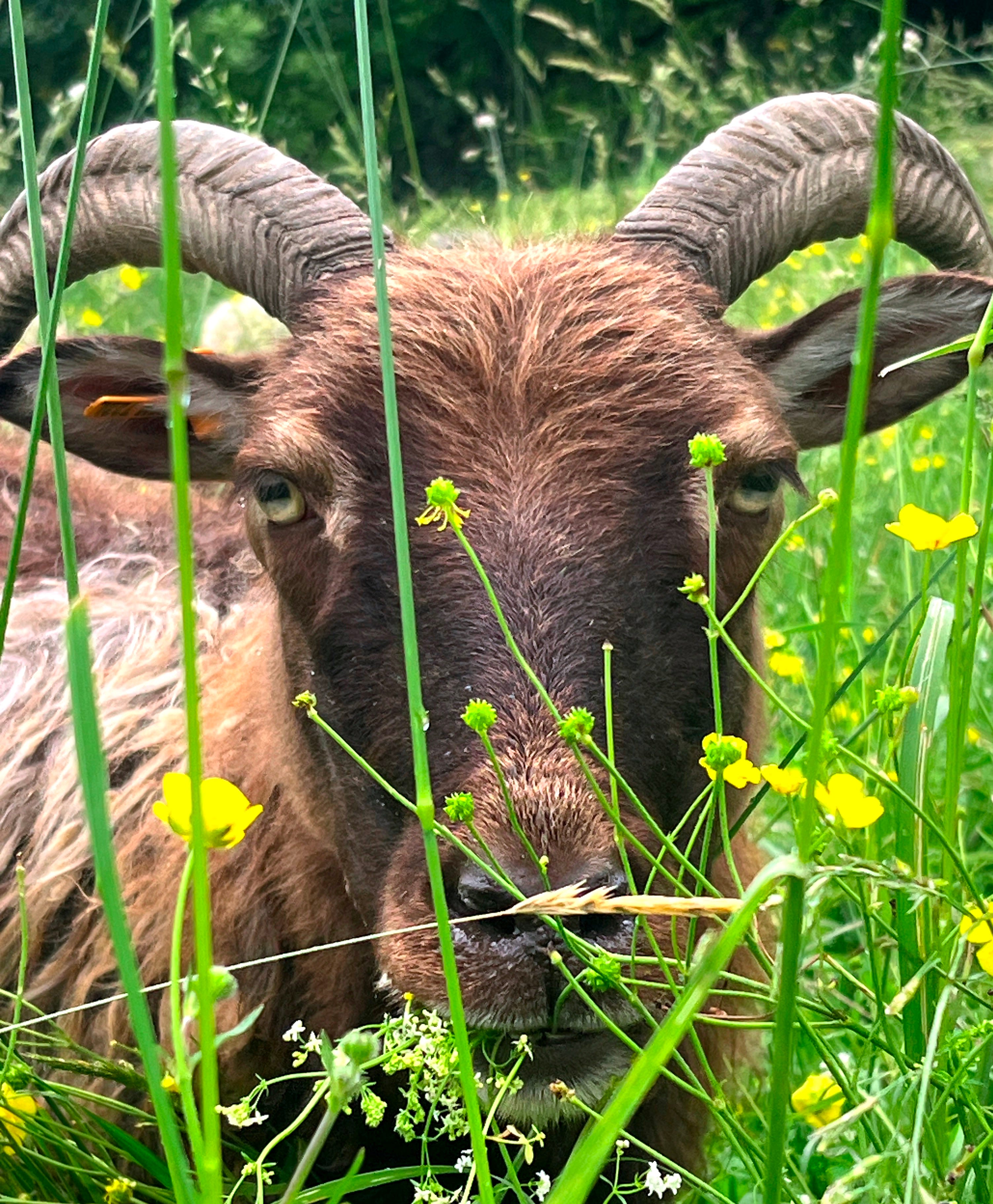
In honor of The Salt Stones coming out in paperback (with a new cover by Wren that I’m thrilled about!), I have come to spend two nights and one full writing day at a sheep dairy in the Adirondacks.1
I’m at a little hut tucked in the pines, where the Hermit Thrushes and Veerys are singing their hearts out in the rain. The “shepherd’s crook,” as the hut is called (shouldn’t it be the croft?), has no wifi, no electricity or running water, all of which is helpful for focusing the mind and spirit. As are the birds, whose ethereal music sounds like it comes straight from a boy’s choir. I have not. I’ve come from a farm bezerk with blueberry harvest and visitors and fellowship retreats and sheep getting out at 4 am in the thunder. (Thank you, everyone, for letting me sneak away.)
It has been a very intense last year. So much has been lost and so much has been born. With so little time to stop and listen. I’m here to do something unusual, for me, which is to pause pay homage to something I created, and ask what I have learned.
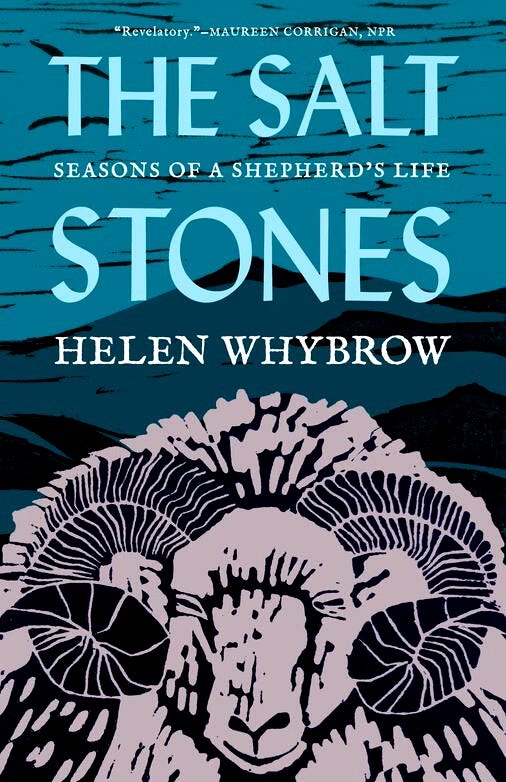
In the one year since The Salt Stones was published, this book – for which I honestly had zero expectations— has become something, something that is both more than and less than the thing that is my life. For it is my life and is not my life, as every writer of personal narrative will tell you. Personal narrative – memoir if you want to call it that but I don’t like the term — is like your child; there is probably no other way to describe it. About half of your DNA is left out. And, just as with your child, or with any writing you put down in honest pursuit of your own astonishment, its existence begins to teach you things.
Here are some things given to me by The Salt Stones:
1. After years of dread and false starts, and countless notes to myself about how to be more disciplined, writing fully found me—the compulsion, the practice, the love. Now that I am finally there, all the self-badgering seems, in hindsight, unnecessary; it was about desire all along, not fitness. My inner squirrel dog awoke, crazy for the chase. Or, as Annie Dillard says, the art entered the body. So, now that I’m writing a novel, I’m making space for it, but without the bullying and the angst.
2. The familiar cloak of self doubt came back, not when I was writing down my astonishment and wonder, but when I had to leave that to do public things, like present my book at the New England Booksellers Conference prior to pub day. This, to a large crowd of Indie booksellers in Hartford – people who read everything, and probably didn’t give a hoot about sheep – felt intimidating! I have grown to love readings; the writing speaks for itself, always. It is pitching why you think your book should matter that’s crippling and brings on all the demons of relevance. Does it matter? Does pastoralism matter? Does my own feeling about loss and healing and the land? Am I faking an answer? Am I a relevant human? Yeeesh.
But I learned something. I learned that making an impression does not matter. The writing is what matters. The talking about the writing, the promotion, the spin, the Instagram reel or “story” – none of those matter. Which is a good thing, because most of us writers have no clue how to do that, and are temperamentally unsuited. The announcements and accolades….do them if you want, fine, but know they are not the art. They are the shadow of the art, a great distraction, always behind you, not what’s next. You can confuse what is the art with what is the shadow of the art, and this can be dangerous. At least, I’ve concluded this, and I feel much better. I am no longer intimidated on stage. I just show up and try not to tell people what I think they want to hear. One thing I do know after recently losing both my parents: There is limited time in life.
3. A friend recently wrote: “What beautiful, heart warming and heart rending work you did with The Salt Stones. I could feel your love, along with the cost of it, all the way.” This is a wise, older friend, a beautiful writer herself, who dearly knows the cost of loving.2 But is there a cost of loving? There’s been so much loss in my life since finishing the book, and yet I honestly feel that the book gave me the strength to bear it. I learned that my love song became my ballast. My years of honest peering at the trials of life, the deaths and not just the births, keened my sight to gratitude, made me hold everything a little more lightly. Seeing so much death in all its grim and strangely beautiful detail gave me the bearing to sit with my father during those torturous days and nights as he fought his way to the other side. To sit with death. This has been a true gift of writing The Salt Stones.
4. Gratefully, although that would have been enough to write the book, for me, the gift of the story seems to have reached beyond me. I am beginning to take this in. To honor those gifts and bear them as a responsibility to write again. I am honored by the young mother nursing her baby who told me the book gave her courage in the scary days of new motherhood; by the older man caring for his mother who read it aloud to her and remembered to touch her; by the young people who write to me about seeking a life on the land with the kind of idealism that I found in myself; by the farmer in his 70s who came to visit me because he felt I had expressed something about the land he’d always known. And so many more.
I cherish these letters and encounters. These are the readers – you are the readers – who gives this book a life of its own, way beyond me and my imagining. Collectively we are leaning in to listen to what matters most to us.
I’m so grateful for this book’s life, and for all of you who carry it. Thank you thank you.
To end, here’s a glimpse of this brief sojourn in the mountains before I head home to to support the amazing work of Knoll Farm, pick blueberries and chase sheep!
Ever - Helen


Blue Pepper Farm. New Yorkers: look for their yogurt in glass jars. It’s the best yogurt, hands down, I’ve ever had in my life. Small-scale, grass-fed, handmade…all the good things.
Please look for her book, Losing the Garden: The story of a marriage, a suicide and a new life of self-discovery. I worked with Laura for two years to shape the early drafts of her story, which is very powerful. Peter, my husband, helped Laura and her husband conserve their homestead and set up a mountain stewardship after Guy’s death.
Wonderful reflections. Thank you for sharing. This: "without the bullying and the angst." I feel this sentiment so deeply as I embark on the next book and wish, wish, wish, wish, I had been gentler on myself the first time around. Always learning.
Holding things lightly and also fully appreciating the individual moments we pass through is the paradoxical lesson of an examined life. It is such a blessing to know that this passing through isn't something we have to do alone. Indeed, "We're all just walking each other home."