
Touch Wood
Celebrating Trees, also the Tangled and Imperfect

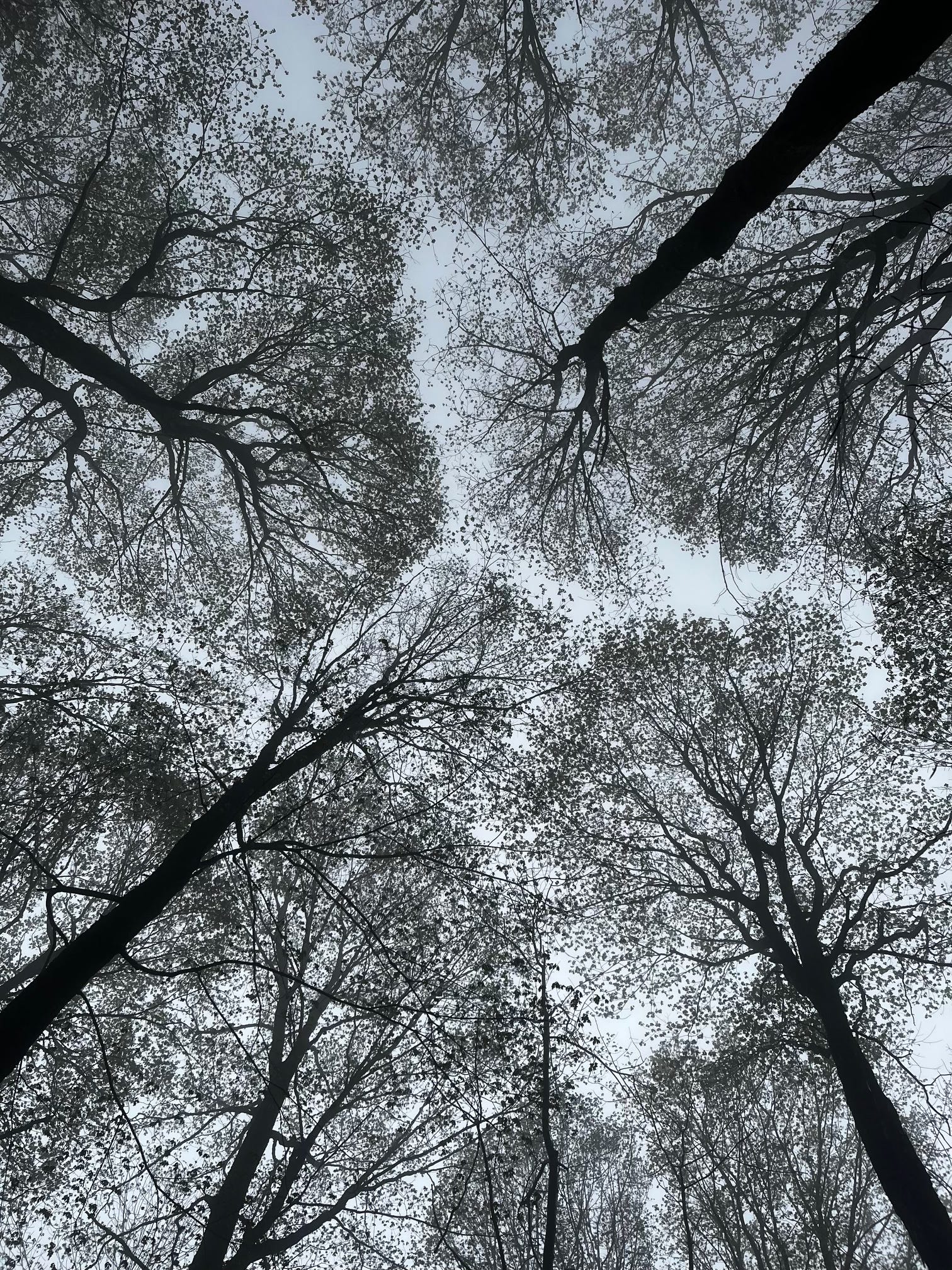
The expression ‘touch wood’ comes from the pagan understanding that benevolent spirits live in trees; in a child’s game, to touch wood made you safe from capture.
My ideas have been coming in the night. By morning they are up in the rafters, sleeping, wings folded and upside down. This is a problem if you’re a writer chasing ideas, or, maybe not a problem but a game, or even an advantage, depending how you look at it. Because today I woke up thinking about AI.
Trying to piece fragments from a swirling dream space is a problem I sense AI doesn’t have, which means it might be something we want to hang onto. In other words, we writers—being more endangered every moment—should understand that all of our flaws and fits and starts, the flotsam and jetsam of the mind, the pieces that never fit, the doubts and the eccentricities might actually be gold dust. They are what make us authentic and make our writing instantly recognizable as human. In the Age of the Machine, Resistance may be embracing Imperfection.
This isn’t a rant about AI, I promise, but it’s been crowding in. It has taken me a while to catch on. In farming, AI means ‘artificial insemination’ and is how you get your cows pregnant so that you don’t have to deal with a bull. I knew the term AI and what it meant more than 50 years ago, and it might be how I learned babies are made and first heard the word semen, which came in a long straw drawn from a tank of liquid nitrogen that swirled with white vapor. The AI we are living with now—and I am coming to understand that yes we are living with it—is not something that impregnates us with creative life force but does, and will more and more, enter our bodies and colonize our minds.
The brain is not a machine, as anyone knows who eats a clementine while stirring the coffee and takes in the fruit’s sharp sweetness on the tongue with the bean’s bitter scorched scent while thinking of one’s mother and feeling in the hips the way she stood in the morning by the kitchen window, hair still rumpled by sleep. The whole body is the brain and the body lives in the world, governed by sensations that will not be tamed. We are not machines. Most of us don’t want to be and wonder how we have gotten here.
I think humans have gotten here out of our need to invent, but also our fear of pain. Our fear of pain, illness, danger, even minor discomfort, keeps us from immersion in the sensory world and keeps us craving machines to do things for us, even to think and feel for us because lord knows those things can cause a heap of hurt. There seems to be no way to fight against any of the Scary Three – climate change, authoritarianism, artificial intelligence – without overcoming our fears of discomfort and totally falling in love again with the chaotic sensory world of nature. If this seems like a leap, try out some scenarios. People will not do a damn thing about climate change if they crank up the AC and live inside, as an easy example. In an emblematic moment, Trump tore up the Rose Garden because he didn’t want the damp grass ruining women’s high heels. The high heels are the problem, not the grass. If everyone in the White House were forced to go barefoot, tell me the world would not be a different place.
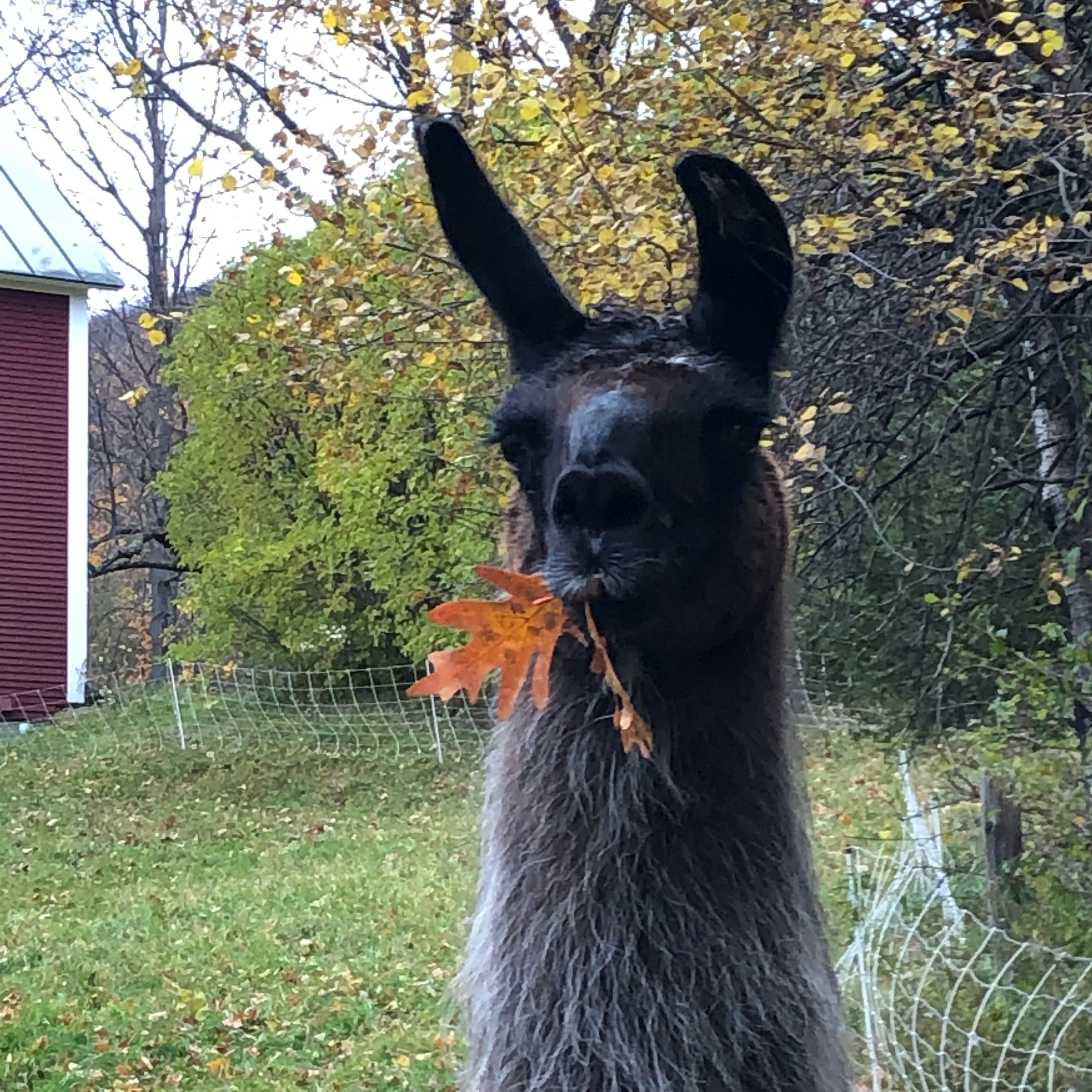
Every day this week I have walked up the hill from the farm to check in with Jed and Nick, who are thinning trees. They are working in a part of the woods that was pasture about fifty years ago, judging by the smoothness of the forest floor and the size of the white pines that grew into the pasture first, followed by maple, ash and birch. Five of the big pines are now dead snags, which we won’t cut, as they are like apartment complexes and food markets for the birds and wildlife. (Always, here, is the reminder that death feeds life.) Several of the young maples are split, and those will be thinned along with the heavy-limbed ash on the field edge that are dying. The dreaded Emerald Ash Borer was found in our town last summer, and so quickly we are seeing our magnificent ash trees go down.
This forest project is about many things. It’s about harvesting firewood, about opening light for the next generation of maples on the edge of the sugar woods where our neighbors just started tapping in the stronger kinder light of February, and its about taking out diseased trees. It’s also about farming: I want to open the forest edge to give my sheep shade on the hottest summer days, days that noticeably grow in number as well as temperature these crucial years, and I want to walk the sheep through open woods from the big pasture into a more remote hillside field that has long been neglected.
The way I farm, there’s a strong rhythm between attention and neglect. Both are important. In the steep hillside field that has been mostly left alone and colonized by young white pine, red oaks are starting to arrive. Thoreau (1817-1862), that keenest observer of nature, noted that “it appears that the pine woods are a natural nursery of oaks…there are comparatively few seedling oaks under the oaks but thousands under the pines.”*
Unlike Thoreau in his coastal plain of Massachusetts, we see very few oaks at our greater elevation and latitude. But they have been migrating north, and they love this dry slope with its thin soils facing the sun. Perhaps the pines protect the seedlings in some way or the squirrels make their caches in the pines and a few whole acorns survive to sprout there. Whatever the reason, this neglected hillside field has dozens of oaks while the rest of the farm has almost none. In the shifting demographics of trees, the oak may replace the ash here. This is hopeful, and I have been marking and caging these little pioneers so that they aren’t eaten by sheep or deer.
When this field was first cleared, probably in the early 1800s, the project was tackled entirely by two-person cross-cut saw and ax, with oxen or horses to drag out the trees. I imagine these teams pulling their groaning loads of timber on wooden wagons over soft dirt roads, treacherously steep, with nothing but sheer muscle and will (human and animal!) to maneuver the inevitable daily disasters such as tipping over or bogging down in mud. The first gas-powered chainsaw and splitter may not have shown up here until as late as the 1940s, around the time of electricity. Machines and technology came late to this isolated mountain valley. I’m sure people were grateful for both.
I am grateful for the machines Jed and Nick have now. It’s mind-boggling how much work they have done in so little time, Jed running up huge pines with ropes and spikes to nicking off the limbs before its felled, Nick like an artist on his small excavator, picking up the logs to place them neatly in a pile where we will later cut them into firewood. He bundles up the tops and puts them on a fire, then he clutches a pine log in the grapple and uses it like a putty knife to gently smooth out the ruts in the ground where he’s been driving. And because this artful machine-operator is also human, he picked out a special maple tree with tap holes and deep red heartwood to take home and mill into beautiful boards.
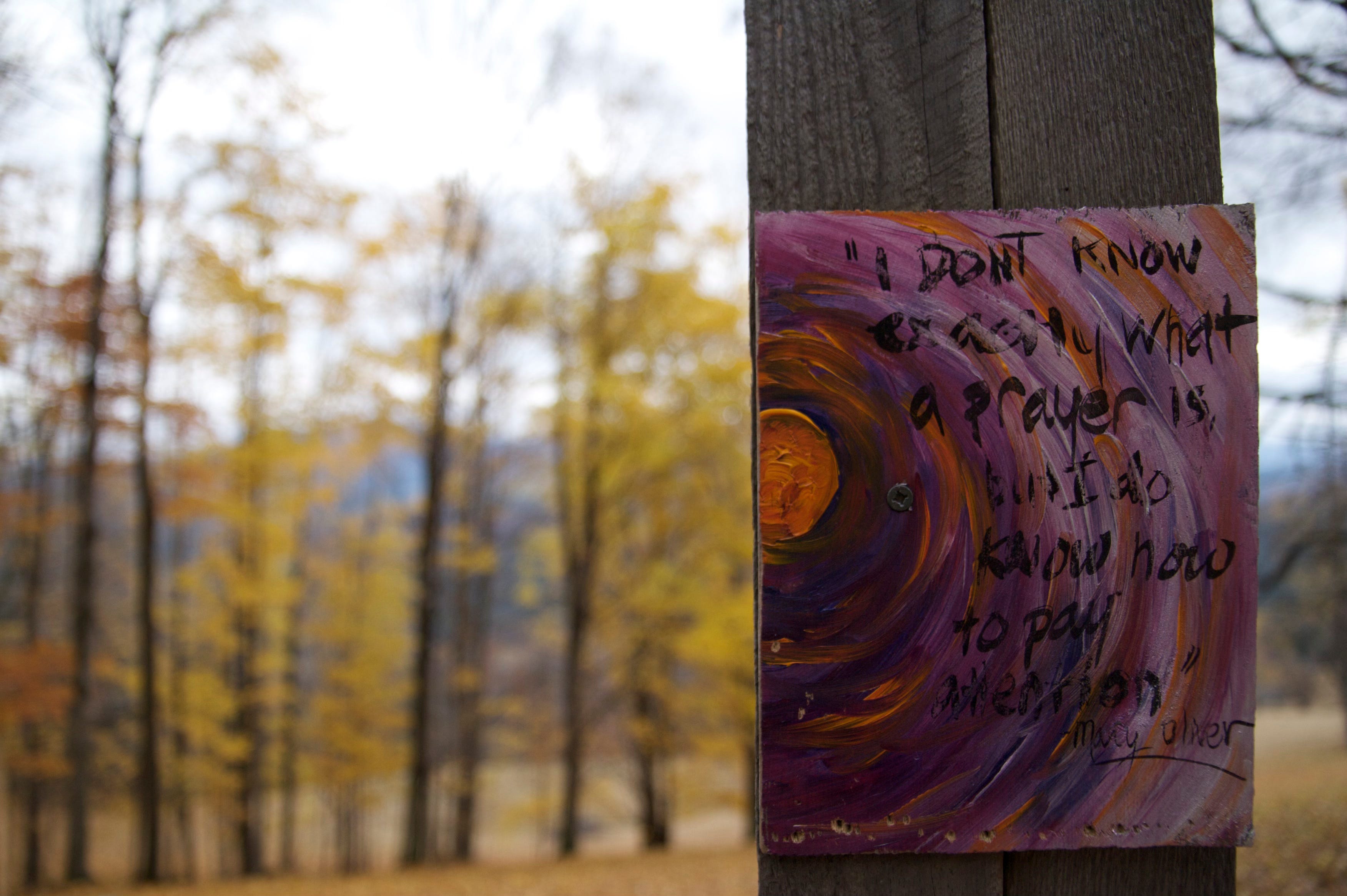
They say the future of this project will be a bunch of robots felling trees and operating excavators and moving wood with drones. Probably, somewhere, this is already happening. Maybe, like everything in the 20th century, it will come to Vermont late, and jobs like logging and farming will be secure here for a generation or two longer than in other places. We can only hope.
Every day this week, Jed and I have tromped around in the snowy woods to lay our hands on trees, the corduroy of ash and the sinew of beech, the resinous dark skin of the great pines. We talk about what might be living in the dead snags, and how we love the glacial erratic that is now visible through the trees and what this land might have looked like in other centuries. We talked about cool places for a fire pit, and how a spring they uncovered under a ledge could be piped to water the sheep. They took out all the barbed wire, and not because I asked.
What scares us about AI is not that it will make life easier but that it will make life emptier. That it will take away many of the human moments of connection and conversation, of problem solving and pondering, of grappling with what’s right action, even of debate and difficulty that leads somewhere new. In my experience, in a meaningful life most of one’s time is made up of such moments.
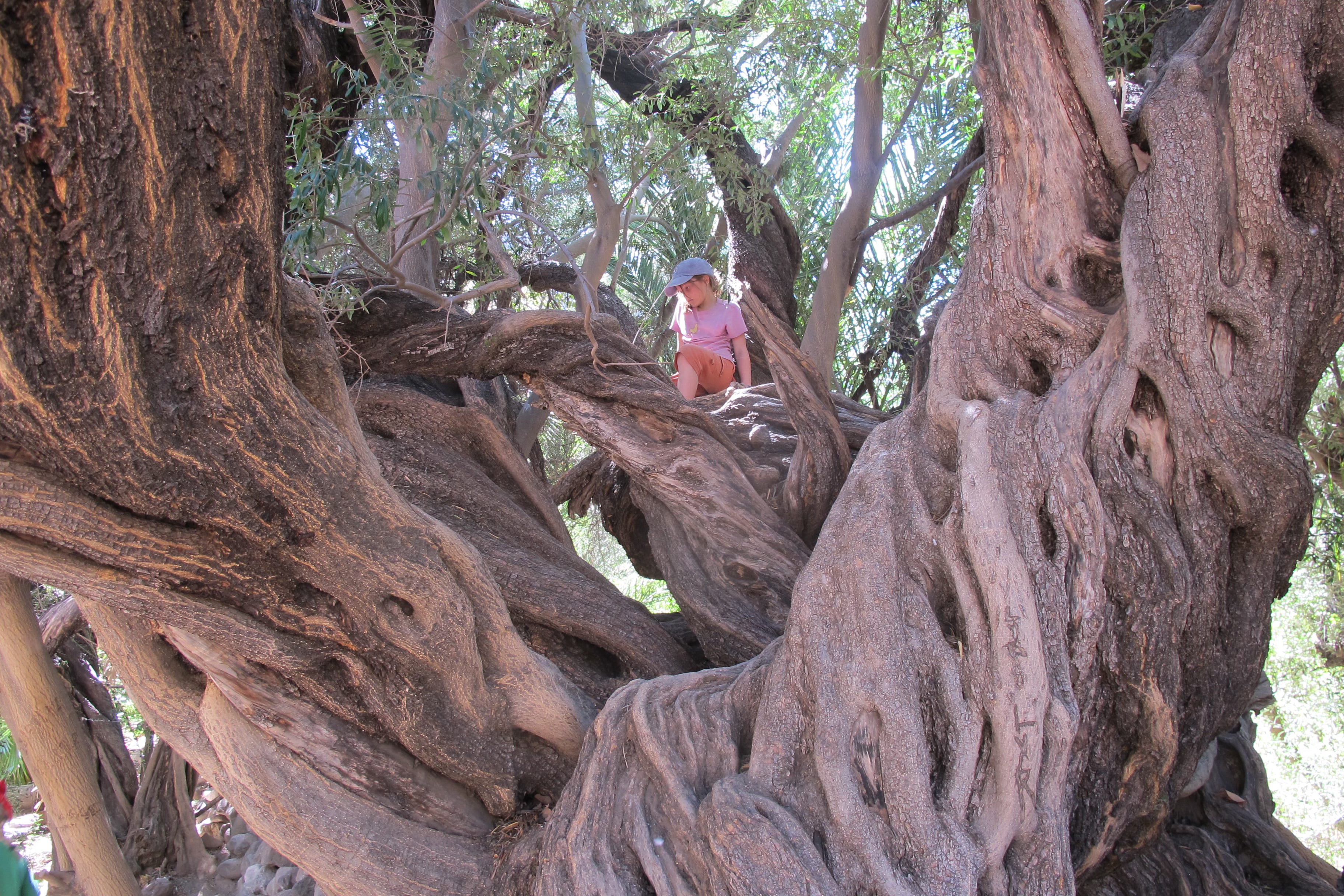
Let’s hang tight to the imperfect and tangled but tangible moments of everydayness. Let’s not stop touching wood and feeling in the trees the pulse of something that is more akin to human than any robot will ever be.
I am simply grateful, Helen. For your words. Please keep bringing us back to “center.”
I love this so much, and am only slightly embarrassed to admit that I spent too many paragraphs thinking Jed and Nick were llamas, which was a very entertaining visual.