
Human Mycology
The power of acting like mushrooms

Hello, good morning,
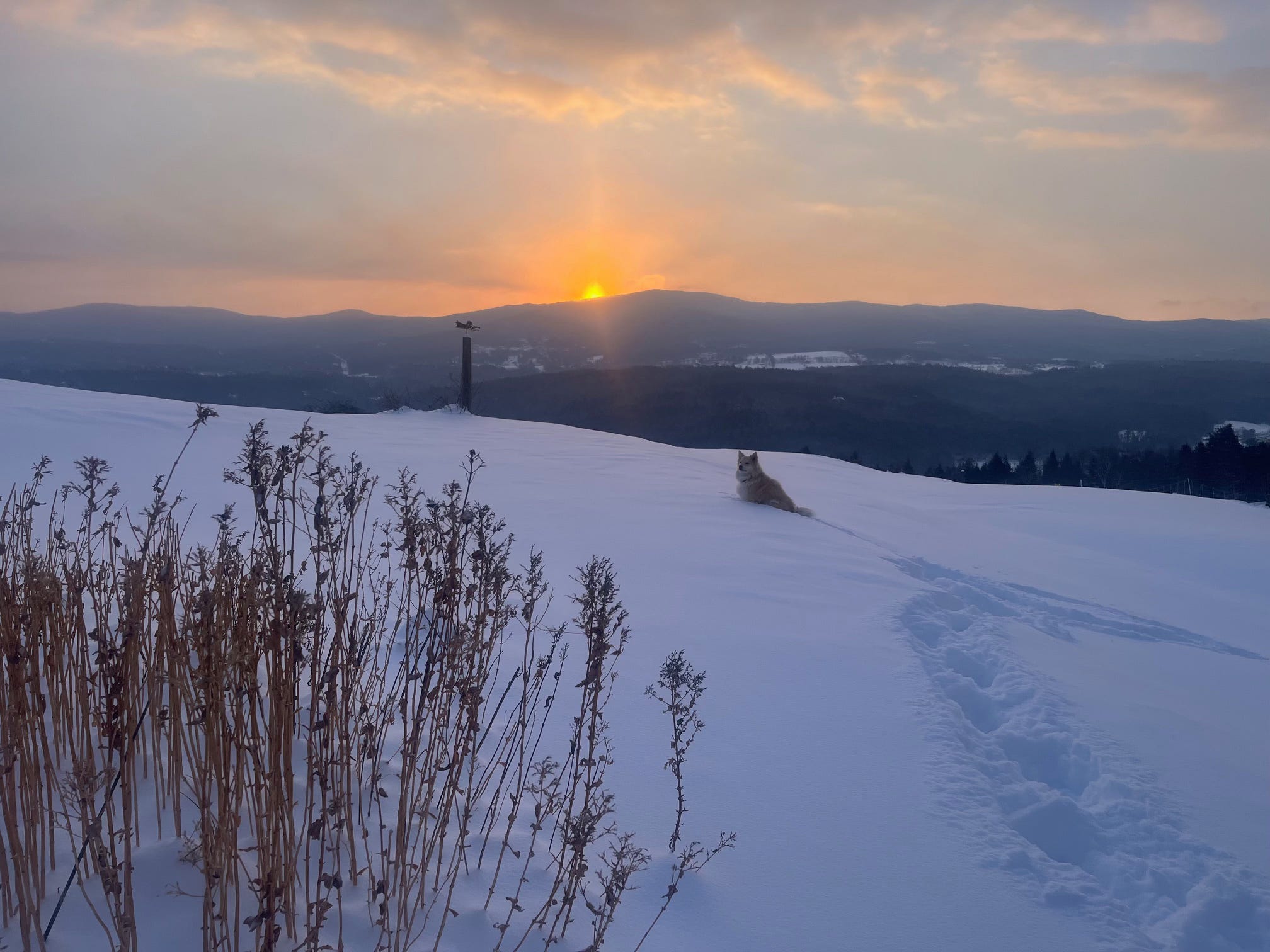
Sun shining in over this coldest field, cold that hasn’t broken for weeks now, but today I have sun and I count my blessings. I sit here in sweater and scarf, waiting for the wood stove to kindle, and bask in the February light. I have always loved February so much more than January. It’s lighter and kinder, if still cold, and the little birds in the woods begin ever so slowly to make noise again in the trees.
Walking through those trees with a forester on a frigid day last week, we talked about how essential these days of cold are for the survival of the maple tree, and as a check on the tick population that is killing the moose. We talked about how the forest will soon be full of dead ash (Emerald Ash borer was found in our town for the first time last summer) and pockmarked beech that won’t grow to be old, but how the red oak are coming in as the climate warms and may soon be a dominant species here. We talked about helping maples to regenerate by spreading brush that deter the browsing of too many deer. There is a lot to mourn in these changes, but also to pay attention to, and to assist.

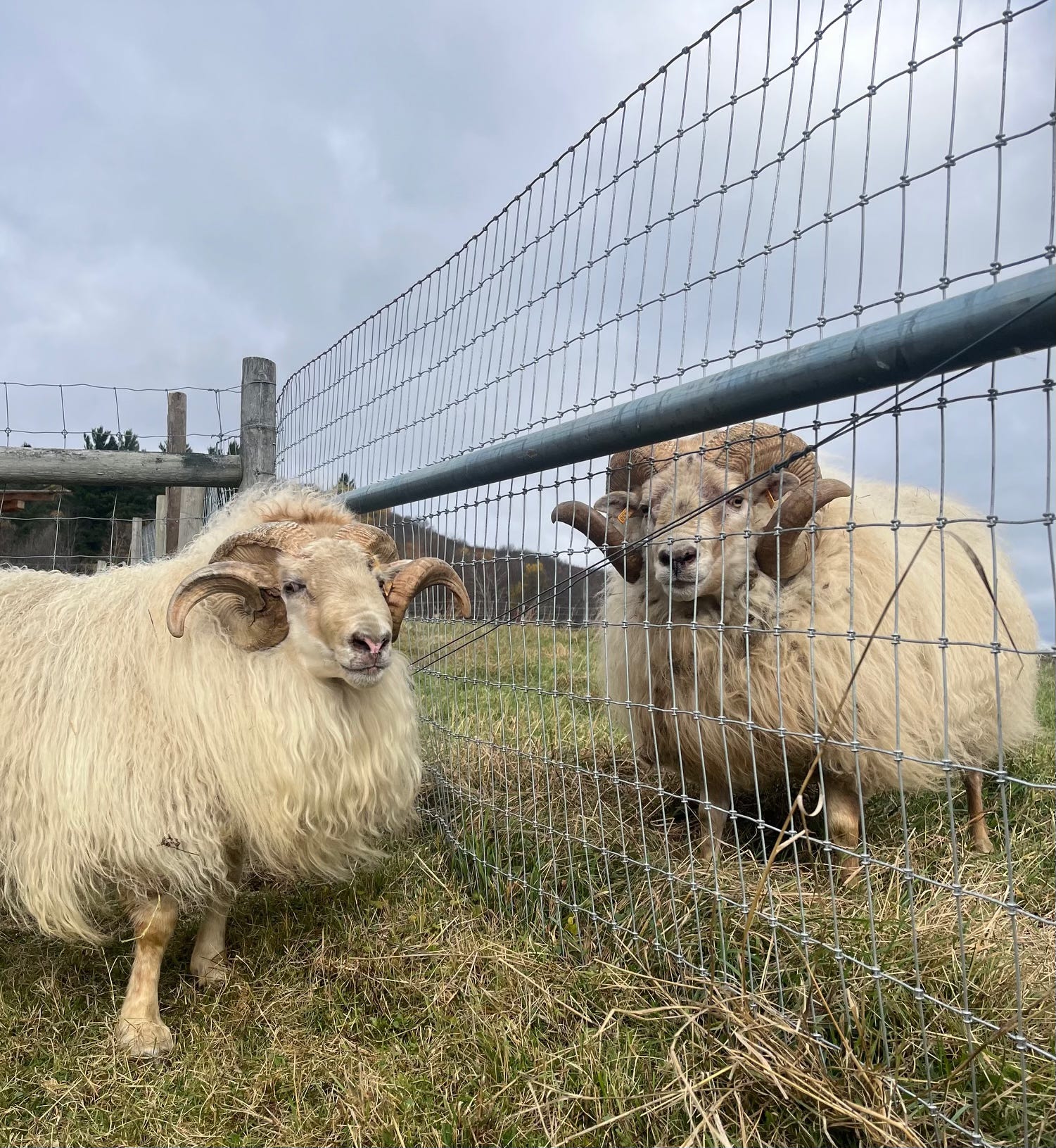
Out in the barn the morning I noticed the sheep looking decidedly rounder as their fleece thickens and babies grow. The rams have spent the winter outside with their full summer fleeces - nearly a foot thick and waterproof - keeping them insulated and dry. I feed them in a three-sided shed in their field but they never stay there. Only one ram, Shakespeare, seemed miserable, not because of the cold but because he was the outsider, brought in late from another farm, and getting picked on. You aren’t like us, the other rams decided, and we are going to gang up on you. His face was bleeding everywhere in the snow, so I pulled him out and gave him a safe haven in the barn with the girls, who pay him no mind at all.
Once, I bought a flock of four sheep from another farm and it took them all summer to integrate with mine. They would graze separately in the field, wild-eyed and skittish, as if told by the others that they didn’t belong and lacking all confidence to assert otherwise. I didn’t see my ewes chase or butt them, but maybe they were using bad words, or just staring in a way that made the newcomers feel unwelcome. Maybe it just takes time to feel like you belong somewhere new. They stuck together with what was familiar. It’s not just humans who don’t like change.
Like many of us, I’ve been horrified with what has been happening in occupied Minneapolis, and also captivated by the response. To see people of many different views and life circumstances act as a collective is undeniably powerful. To hear people defend their neighborhood, their peace and sense of belonging with their neighbors, is powerful. This is not just people protecting their own but people protecting those who are under threat because they are different, because they have been labeled outsiders. It’s the equivalent of my flock of sheep surrounding and hiding the four newcomers when the wolves come, knowing they are more vulnerable grazing in a small group alone. If nothing else, this is something to be proud of.
Collective action, mutual aid, whatever you want to call it, is powerful stuff. It’s powerful for what it gets done, but also because for what it represents and says about us at our best. It’s when we remember that human society is also an ecosystem, constantly evolving, and each of us is a tiny piece of something more powerful and intelligent than we are as individuals. It’s a time when the preoccupation with being individual and being competitive seems so much less interesting and alive, maybe even absurd and misguided. And not at all what we need right now.
Our friend Grace, who runs an organic farming organization here in Vermont and is also a rabbi, joined other faith leaders in Minneapolis and put it this way in her jam-packed notebook on what solidarity looks like:
“A decentralized network is very, very hard to squash. It’s like mushrooms, roots under the soil: it can pop back up anywhere. It doesn’t have one charismatic leader who can be easily taken out. It is a commitment, a set of practices, skills that are imminently replicable.”
For some in the hot zones, solidarity has itself become a reason in itself to get up each day. They know the power of human ecology (human mycology!) in a world that wants us to be separated and isolated and afraid.
Maybe the answer is to be as mushrooms, not individuals striving for our own contribution, and not sheep following blindly behind what is familiar. Instead to interconnect, share resources, give and receive nutrients, spread invisibly but extensively, enclose, enrich, and, yes, be medicinal.
I’ve been reading Rebecca Solnit’s new collection of essays, No Straight Road Takes You There. Among many fine essays about resistance and finding power from the margins and the collective, she ends with this rallying cry:
“They want you to feel powerless and to surrender and to let them trample everything and you are not going to let them. You are not giving up and neither am I. The fact that we cannot save everything does not mean we cannot save anything and everything we can save is worth saving. Remember what you love. Remember what loves you. Remember in this tide of hate what love is. The pain you feel is because of what you love.”
You can find more from Rebecca Solnit on her always insightful newsletter, Meditations in an Emergency.

A Note on the Belonging Book Club (B.B.C.)
This fledgling experiment of mine seems to have one baby claw over the edge of the nest. If you have signed up, thank you! Thank you thank you for your trust as I develop a sweet archive of books about belonging and identity and how land shapes us, and hopefully find more ways to add your voices and bump up the conversation.
Every subscriber to this newsletter got a one-month comp to the B.C.C., but rest assured that if you do nothing, you will come off the list. (And my apologies if Substack sent you emails badgering you to subscribe - that was not my intention!) But you can jump in at any time by finding the Belonging Book Club tab on my home page.
Our February book is Whiskey Tender, by Deborah Jackson Taffa. I’m excited to share my thoughts with you about this incredibly rich, layered and deeply intelligent memoir about growing up as Native and Chicana in a violent border town on the Navajo reservation.
In March we’ll go back to classic fiction and immerse in Maya Angelou’s I Know Why the Caged Bird Sings, and in April I’ve invited my brilliant writer friend and reader extraordinaire, Nick Triolo, to bring a book of his choice.
SOUP!
And now, since it’s Soup Season, and everyone could use a nourishing bowl now and then, here’s one I made the other day with veg from the root cellar that really hit the spot, is vegan, cheap and easy.
Ingredients
1 Tbsp olive oil
1 medium-sized onion, diced
2 garlic cloves, chopped
1 tablespoon ground cumin
1/2 teas smoked paprika (or chili)
1 small butternut squash, cubed (about 2-3 cups)
2 medium-sized yellow potatoes, cubed
3-4 cups vegetable broth (or water, but broth gives more flavor)
dried or fresh herbs to taste (I used thyme and parsley)
1-2 cups chickpeas, cooked and drained (or 1 can)
½ tsp salt, or according to your taste
freshly ground black pepper
Instructions
In a large pot, heat olive oil, then add diced onion cook for about 5 minutes or until the onion starts to soften.
Add cumin, paprika and garlic and stir for about 1 minute.
Add the rest of the ingredients except for the chickpeas, a pinch of salt and bring to a gentle boil.
Reduce the heat, cover the pot and let it simmer for about 20 minutes, stirring occasionally.
When the squash and potato are soft, add the chick peas and heat.
Stir, adjust seasoning
Serve with a drizzle of extra virgin olive oil, crusty bread and pesto.
That’s all for now. Stay safe, stay strong and stay sane.
Love, Helen
This was beautiful and meaningful, Helen. Thank you.
Wow, some wonderful reflections here! They help and do bring hope as Jim says. I love the images you share with us of your sheep and the conflict that is present which you as shepherd help to resolve. And, yes, I would love a bowl of that soup. Thanks.